Modelimage4w ago

Nano Banana 2 Lite review

Google's fastest and cheapest Gemini image model. I ran it: a text-heavy poster came back in 4.3 seconds with both lines of type rendered perfectly — the failure mode most image models still trip on.

By Ravi Menon · Models & Benchmarks EditorVerified 2026-07-19
Maker
Google
Launched
Jun 30, 2026
Pricing
freemium
Visit official site
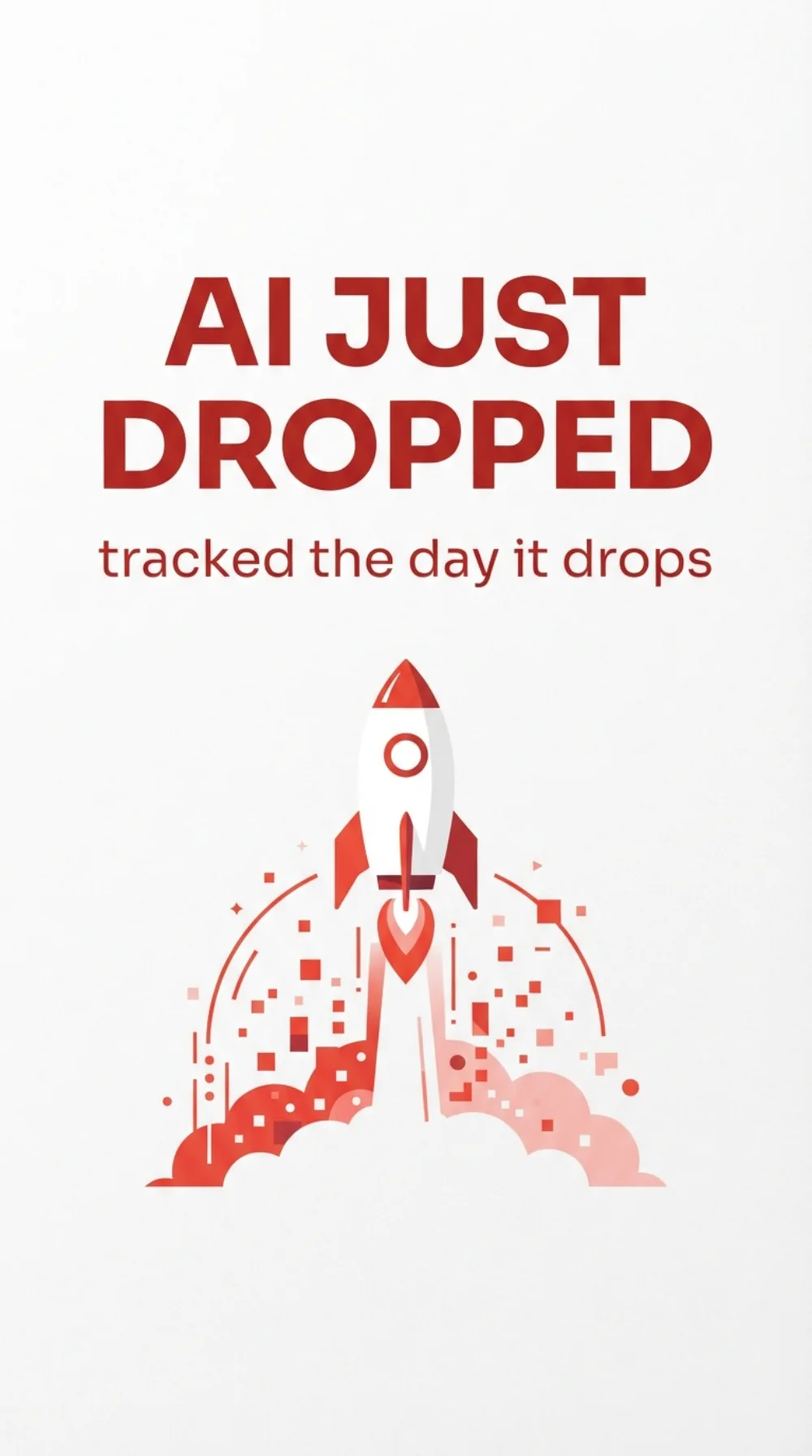
Nano Banana 2 Lite — real sample output
Our own output from Nano Banana 2 Lite, generated 2026-07-19 via the Gemini API — the exact image from the hands-on below. Both lines of type came back with correct letterforms, which is the part most image models still get wrong. Unedited except for WebP compression.
7.5/ 10 our score

Our verdict

For fast, cheap, text-on-image work this is the one I'd reach for. I gave it a deliberately nasty brief — a flat-design poster with two exact lines of copy — and it came back in 4.3 seconds with both lines rendered perfectly, which is precisely where most image models fall apart. The catch is control: you get a fast, opinionated result, not a directed one. No aspect ratio unless you ask, JPEG rather than PNG, and C2PA provenance baked into every file. Cheap and legible beats slow and precious for social cards, thumbnails and mockups; for finished art direction, look elsewhere.

Score is our editorial opinion after hands-on testing — not a vendor or benchmark figure.

Google shipped Nano Banana 2 Lite on 30 June 2026 alongside Gemini Omni Flash, and the pitch is refreshingly narrow: the fastest and cheapest image model in the Gemini family. Roughly four seconds a picture, $0.034 per 1K-resolution image through the API, free if you just want to poke at it in the Gemini app or AI Mode in Search. It is the trimmed-down follow-up to Nano Banana 2 (Gemini 3.1 Flash Image), which arrived in February as Google's default image generator across its consumer products.

Speed-and-price claims are easy to make, so on 19 July I called gemini-3.1-flash-lite-image directly through the Gemini API and gave it the brief I use to embarrass image models.

The test: make it write

Text is where image generators still humiliate themselves. So the prompt asked for a flat-design poster on a white background, vermilion accent, carrying two exact lines: "AI JUST DROPPED" and "tracked the day it drops". No aspect ratio, no other constraints — I wanted to see what it would do unsupervised.

It came back in 4.3 seconds. Both lines rendered perfectly: correct letterforms, correct words, nothing garbled, nothing melted into pseudo-Latin. That is the single most useful thing I can tell you about this model. The flat-design direction and the vermilion accent were both followed accurately, from one prompt, with no retries.

The API's own accounting for that run: 46 prompt tokens in, 1,497 candidate tokens out, of which 1,120 were the IMAGE modality.

Where the "Lite" shows

Not in quality — in control. Because I never specified a ratio, it picked one, and picked tall portrait. That is a perfectly reasonable default and completely wrong if you were expecting a 16:9 social card. Say the shape out loud or accept a surprise.

The file that came back was image/jpeg, 563 KB, with C2PA/JUMB provenance metadata embedded. JPEG is a defensible default for photographic output and a slightly annoying one for flat vector-ish graphics, where you would rather have crisp PNG edges and an alpha channel. The provenance metadata is a good thing — it just means the file is quietly labelled as AI-generated wherever it travels, which is worth knowing before you drop it into a client deliverable.

Who it's for

Anyone generating images by the hundred where legibility matters more than art direction: social cards, blog thumbnails, deck backgrounds, quick mockups, placeholder assets in a build pipeline. At three-and-a-bit cents an image with four-second turnaround and text that actually reads, the economics stop being a consideration at all — you iterate by regenerating rather than by prompt-engineering.

Who should skip it

If you need transparency, lossless output, or fine-grained compositional control, this is the wrong tier — step up to the full Nano Banana 2, or to a model you can steer with more than prose. If you need weights on your own hardware, this is the wrong model entirely: it is closed, hosted, and Google-only.

One caveat on my number. This score comes from a single, deliberately hard generation — a real hands-on run, not a spec-sheet read, but one prompt is one prompt. It tells you the model is fast and can spell. It does not tell you how it handles faces, hands, complex scenes, or a hundred consecutive briefs. I will revisit as I put more through it.

Provider

Providergooglegemini-3.1-flash-lite-image· Proprietary (closed weights)

Specs & key facts

What it doesText-to-image generation via the Gemini API[src]
Model idgemini-3.1-flash-lite-image[src]
Generation speed~4s (4.3s measured on my run)[src]
API price$0.034 per 1K-resolution image[src]
API methodsgenerateContent · countTokens · batchGenerateContent[src]
Free tierGemini app + AI Mode in Search[src]
Launched2026-06-30[src]
LicenseClosed / proprietary — hosted only[src]

Capabilities

Text-to-imageYes
Batch generationYes (batchGenerateContent)
Token countingYes (countTokens)
Output formatimage/jpeg (my run: 563 KB)
Provenance metadataC2PA / JUMB embedded in the file
Self-hostNo — hosted API only

How to use it

  1. 1Get a Gemini API key and point a generateContent call at model id gemini-3.1-flash-lite-image.
  2. 2Put the whole brief in one prompt — subject, style, background, colours and any exact on-image text in quotes.
  3. 3Specify the aspect ratio explicitly. Left unsaid, it picks for you (mine came back tall portrait).
  4. 4Expect image/jpeg back, not PNG — re-encode if you need lossless or transparency.
  5. 5Batching a set? Use batchGenerateContent rather than firing generateContent in a loop.
  6. 6No API access needed for a quick look — the model is free inside the Gemini app and AI Mode in Search.

Pricing

Free (consumer surfaces)

Free

Available at no cost inside Google's own consumer products — the Gemini app and AI Mode in Search.

Gemini API

$0.034per 1K-resolution image

Pay-as-you-go through the Gemini API on model id gemini-3.1-flash-lite-image.

Two doors, two prices. Casual use is free in Google's own apps; programmatic use is billed per generated image through the Gemini API. There is no separate weights license — this is a closed, hosted model.

Pros & cons

Pros

  • Text rendering held up: both lines of exact copy came back with correct letterforms, no garbling.
  • Genuinely fast — 4.3 seconds wall-clock, matching Google's ~4 second claim.
  • $0.034 per image makes bulk generation an afterthought rather than a budget line.
  • Free to try inside the Gemini app and AI Mode in Search before you touch an API key.
  • Colour direction and flat-design styling were followed accurately from a single prompt.

Cons

  • No aspect control unless you ask for it — mine returned tall portrait, unprompted.
  • Returns JPEG (563 KB on my run), so no transparency and lossy edges on flat graphics.
  • Every file carries embedded C2PA/JUMB provenance metadata — fine by me, but worth knowing.
  • Closed and hosted: no weights, no self-hosting, no offline path.
  • It's the Lite tier — pitched on speed and price, not on being the most capable model in the family.

Alternatives

FAQ

Sources

  1. 1.Launch on 2026-06-30, positioning as Google's fastest/cheapest Gemini image model, ~4 second generation, $0.034 per 1K-resolution image, free availability in the Gemini app and AI Mode in Searchhttps://blog.google/innovation-and-ai/models-and-research/gemini-models/gemini-omni-flash-nano-banana-2-lite/Verified 2026-07-19
  2. 2.Model identity readback: displayName "Nano Banana 2 Lite" for model id gemini-3.1-flash-lite-image; supported generation methods generateContent, countTokens, batchGenerateContenthttps://generativelanguage.googleapis.com/v1beta/models/gemini-3.1-flash-lite-imageVerified 2026-07-19
  3. 3.Predecessor context: Nano Banana 2 (Gemini 3.1 Flash Image) launched 2026-02-26 as the default image generator across the Gemini app, Search AI Mode and Flowhttps://blog.google/innovation-and-ai/models-and-research/gemini-models/gemini-omni-flash-nano-banana-2-lite/Verified 2026-07-19

More coverage

News & first-looks about this release. Coming soon.
Head-to-head comparisons. Coming soon.